
All will be well
Vortex shedding and the fear of loss

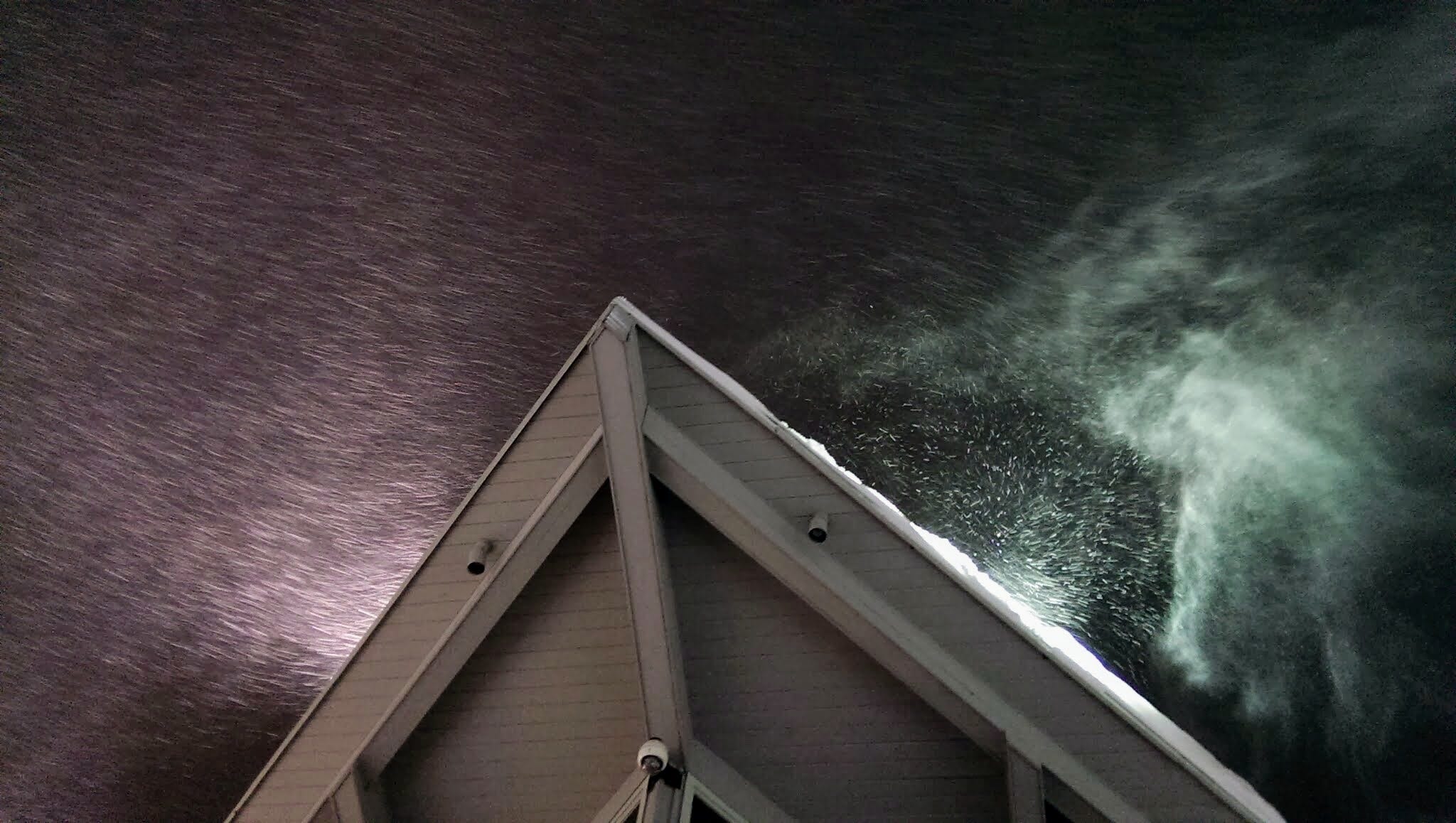
A few weeks ago, we had a high wind warning from around dinner time through to my morning alarm for work—sustained winds of 20-30 mph with gusts up to 65 mph. I have lived most of my life in the Northeast. We don’t get a lot of extreme weather. Blizzards have become less frequent with the warming climate, and by the time hurricanes get up to the Boston area, they tend to be mostly heavy rain events. High winds tend to come in winter and spring with Nor’easters and cold fronts. I do not like high winds. I really do not like strong winds. Wind scares me. Okay, to be really honest—it terrifies me.
I went to bed knowing I’d need to use all the tricks I had: focusing on the soft comfort of my pillow and blanket, practicing rhythmic box breathing, reminding myself I was safe and the wind would pass. I hoped that the steady wailing outside would still for a bit so I could fall into a deep asleep. I managed to sleep for an hour or so before a fierce gust roared me awake. I could feel the pressure building, pushing down on my sternum; the panic I thought I had worked through making a confident return. On the other side of the window above my head was a constant surge of noise, building like a majestic ocean wave. Unlike a wave, however, this build-up of tension didn’t crash down and release. It built up and up, crescendoing into the howling, terrifying gusts of 50-, 60-, even pushing 70-mile winds. And the heaviness in my chest matched, the weight feeling heavier and heavier as the howling, shrieking of air rushing over trees and the roof of our house continued without end.
The noise created by wind is called Aeolian tones, named for Aeolus, the Greek ruler of the winds. The Ancient Greeks believed that these sounds were Aeolus’ voice. Aeolus caught all the adverse winds in a leather bag, gifting them to Odysseus so he could sail home with the gentle Zephyrus wind urging him toward Ithaca, where Penelope and Telemachus were waiting. His crew found the bag just as Ithaca appeared ahead of them, home finally in their sights. Believing it to be treasure, they opened the ox-hide satchel and unleashed a violent storm, hurtling the ship back to Aeolia, the floating island home of Aeolus.
It wasn’t until around 1650 that Athanasius Kircher, a Jesuit scholar, began to study the scientific origins of wind sounds. He discovered that these sounds were created by wind vibrating as it passes over or around an object. This noise is caused by vortex shedding—a fancy term to describe the spinning swirls of air that gust past an object. As I lay in my bed, surrounded by increasingly rapid vortices shedding around every surface, each tree limb and roof corner transformed into a reed, vibrating and producing the dark, haunting wails of the delightful spring air being forced out by the blast of winter, fighting to hang on.
I am not sure when my fear of wind started. I don’t recall if I lay awake in my childhood bedroom willing away the gusts outside. I know that it became more intense once the walls of my home sheltered my own babies. My fear is rooted in trees or branches falling with such force that the roof can’t withstand their weight and everything inside is destroyed. The ferocity of the air swirls shaking the trees right out of the earth, pulling their roots up and out, forcing the massive weight of decades of growth vertical. As I lay awake, so many things ran through my head. Maybe I should go downstairs, try to sleep in the family room. I counter this with the thought that if a tree takes out the upstairs, I don’t want to survive if M, L, and D do not. The thoughts all follow along these lines—morbid and full of fear. At one point in the single-digit hours of the morning, I pull up the weather app on my phone and look at the graph of wind and gust speeds. I see that we are just at the beginning of a steep increase in speed, which only accelerates my heart rate and intensifies my panic. I get up. Walk around. Wonder if M is awake, as he, too, can worry about the winds. I hope he is not. I consider grabbing my book, heading downstairs and reading, but I know I won’t be able to settle on the lives contained within the novel. So, I end up back in my bed, breathing in through my nose, out through my mouth, repeating that all will be well, this too shall pass, over and over like a mantra.
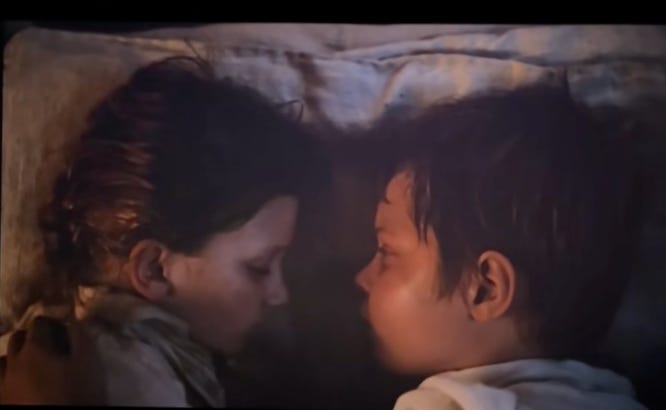
All will be well is the phrase Agnes repeats over and over again to her young daughter, Judith, as she lies in bed, swollen, feverish, and near death from the plague in the movie, Hamnet. Agnes’ mother-in-law, Mary, says to Hamnet, Judith’s twin brother:
Never take for granted…that our children’s hearts beat, that they draw breath, that they walk and speak and smile, argue, play.
Never forget for a moment that they may be gone.
Hours later, it will be Hamnet Agnes is trying to will back to health with her more frantic uttering of the phrase all will be well, Mommy’s here. She holds him, cradles him in her arms as he seizes, wheezes, burns up with fever.
As D and I watched these moments play out on the screen, we anchored ourselves to each other, our hands gripping tighter, knuckles white in the darkness of the room. Our tears were not the silent type, quietly running down our cheeks. No, these were the ragged, uneven hitches of sound that are uncontrolled and well from a place of universal pain. The realization of a parent’s worst fear, portrayed with such depth and raw desperation, reached that place in each of us—that worry we carried around from the moment our eldest child, Z, drew his first breath outside of my body. We, too, had seen both of our younger children, M and L’s small bodies, rapidly cycle between contraction and relaxation: clonic seizing. Seeing the scene played out in a dark night, hundreds of years ago, jolted us back to our own experiences of utter helplessness and an intensity of wanting to will whatever was causing this to stop. An intensity that is unknowable until you have experienced it.
I can play out these experiences, scene by scene, moment by moment, all these years later. The fear in D’s voice as he held L, just barely two years old, his little body jerking and spasming. “I need your help,” he said simply and urgently to our dear friend, a medical doctor, who was with us for the Thanksgiving meal we had planned to enjoy in just an hour or so. Our friend’s calm, reassuring voice as he gave us direction. “D, place L on the floor. R, call 911. Tell them to send an ambulance. Now.” The commands simple, direct, easy for a brain in fight or flight to carry out. His wife taking 10-day-old M from me, rocking him, speaking softly to him, as I called 911. My parents, also there to meet their newest grandchild and celebrate Thanksgiving with us, ushering Z away from the activity, distracting him in the playroom. My father headed outside, stating he wanted to make sure the ambulance knew which driveway was ours. And most importantly, when the seizing stopped, my dear friend speaking with such kindness, softness, and gentleness to our little L. L was gray, devoid of his usual color, and completely still. Were it not for our friend’s voice, reassuring L that he was okay, that his body worked hard to cool his temperature, that he needed rest, I would have been sure he was dead.
Two years later, when now two-year-old M and I lay down for a mid afternoon nap while L and Z were at a neighbor’s birthday party with D, I knew as soon as I woke up to his little body tensing up, jerking in unnatural and frightening movements, exactly what was happening. D and the older boys walked in just as I woke up. I called down to him to call 911. And the scene played out again. This time, I accompanied M in the ambulance while D took the older two to a neighbor’s and joined us at the hospital. This time, we knew what to expect. We knew that the stillness and lifelessness of our little one’s body was not because life had left, but because the burst of electrical activity his little brain ignited to cool his too-rapidly-rising temperature had taken everything out of him. He was hibernating, in a way. Recovering from the enormous effort taken to fight off the fever that had taken over.
Our story ended differently than Anne and William Shakespeare’s. Thankfully. Our boys’ seizures were caused not by the plague that took young Hamnet’s life, but roseola, a common childhood disease. While those initial febrile seizures made them more susceptible to subsequent seizures, they grew out of that risk once they reached six or seven. The acute vigilance we held for several years eventually faded, the worry of another seizure quieted.
But the sight of your child’s body shifting from such violent movement to complete stillness doesn’t leave you. The feeling that you may have lost them, even if it’s just for a moment, pulls your worry to a place you never truly leave behind.
As I lay there in bed, listening to the air swirl and twist around branches and trunks, I thought how infrequent my worry that my children won’t make it through the night is now. I remembered those first few weeks, months of their lives when they seemed so small, so fragile, and I worried that they might just forget to breathe. That their lives, so new and precious and delicate, could be extinguished with a small misfiring in their tiny, pristine brains. Time made it harder and harder to imagine life without them. Experience let me settle into certainty that their presence was as reliable as mine, as the other people in my life. Mary Shakespeare’s admonishment to never forget that they could be gone faded into the background, relinquished its place in the foreground. So this panic, this persistent worry that a tree might take us all, was familiar and yet distant. I no longer lived in this space of wondering if the joy of life with these boys was something that wasn’t mine for more than a moment.
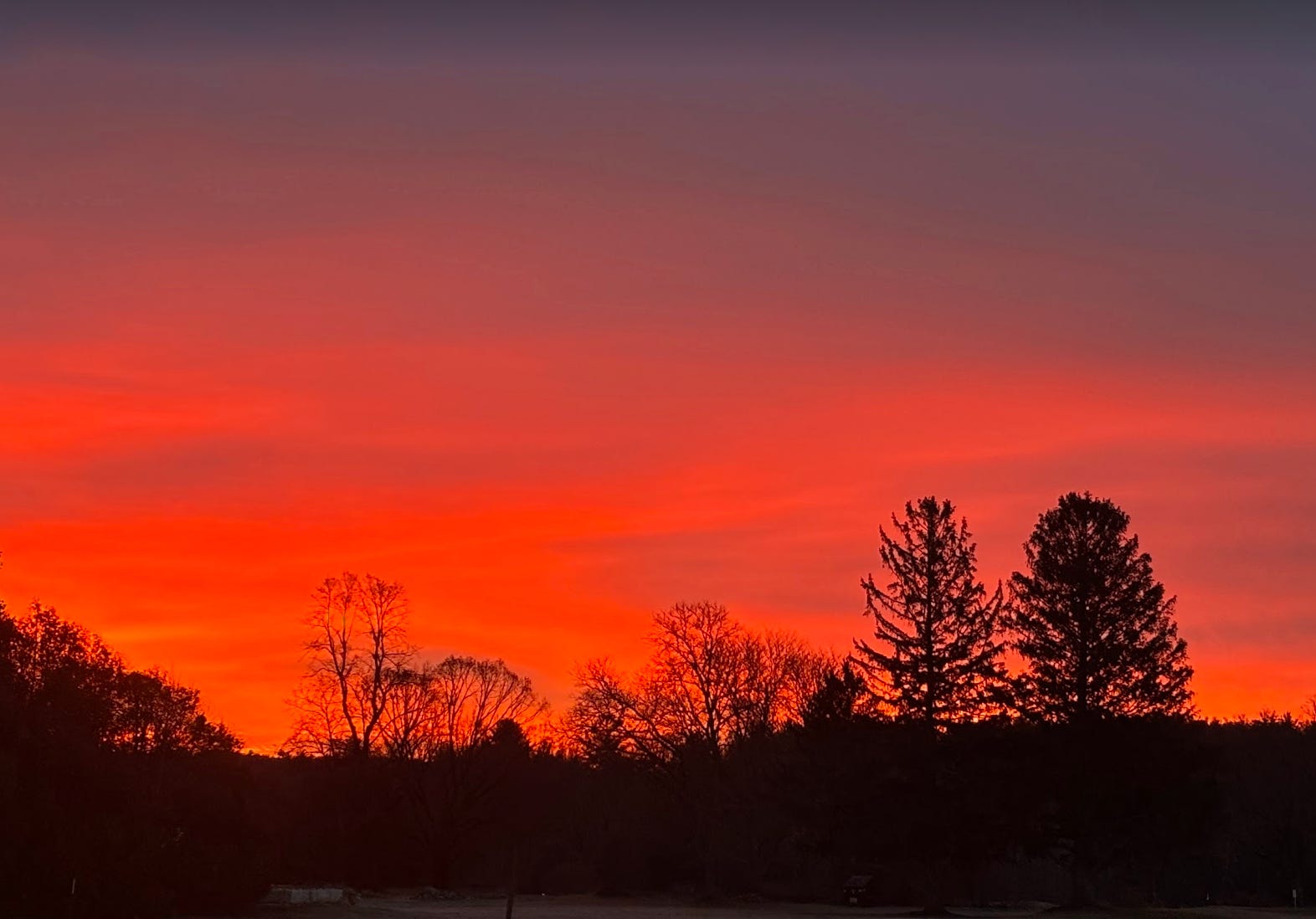
The winds started to die down just as my alarm began its gentle chime. I got up, happy to have my routine to ease me into full alertness. The combination of an awake mind, a hot shower, freshly brushed teeth, and the first blush of sunrise peeking through the window eased my worry. The trees around my house had survived the night, just as I had, and most importantly, just as my three sleeping boys had. The day would unfold, steady and quiet, just as so many before it.
For today, all will be well.
I didn't know that about the boys. How horrifying to experience! I, too, dislike wind, become angry at it or because of it. I love you, Rachel